

Champagne
Vinatis proposes a high-quality selection of champagnes from small artisanal producers and top Champagne brands at great prices. All our bottles are blind tasted by our wine experts before being selected for our site, so you know that every bottle has our stamp of approval.


Top Selections


Champagnes par format
All Our Champagnes


All Champagne brands
Champagne: a wine that has conquered the world
A must-visit destination for lovers of sparkling wine, Champagne is undoubtedly one of the most famous French wine regions in the world. It owes its fame to its sparkling wine. A nectar whose success has spread far beyond France’s borders! Protected by an appellation d’origine contrôlée and listed as a UNESCO World Heritage Site, Champagne owes its fame to its quality, achieved through a unique expertise passed down through the centuries.

The wine of kings, the king of wines
Since the Roman Empire, Champagne has been a wine-growing region producing prestigious wines. However, these wines were not originally sparkling. In fact, during the Middle Ages, the region produced still wines. As in most French vineyards, the vines of Champagne were cultivated by monks from the abbeys, priests and other members of the clergy, but also by princely families.
The fame of Champagne wines reached new heights when Clovis, King of the Franks, was baptised by Saint Remi in Reims in 496. The reputation of this wine continued to grow thereafter, particularly thanks to the coronation of numerous kings of France within Reims Cathedral. Between the 16th and 17th centuries, King Henry IV, a bon vivant, also contributed to the prestige of the region’s wines, as it was during his reign that the nectar produced there came to be known as ‘Vin de Champagne’. In 1654, at the coronation of Louis XIV, champagne was officially recognised as the wine of coronations at the French court.
Champagne: Dom Pérignon, pioneer of the Champagne method
The legend of Champagne as a sparkling wine is linked to the story of Dom Pérignon. This Benedictine monk, provost of Hautvillers Abbey, is said to have pioneered what is now known as the ‘Champagne method’. He is said to have discovered the controlled method of double fermentation of Champagne in the bottle, thereby managing to tame the ‘devil’s wine’. Unable at the time to explain why bottles exploded due to the wine’s effervescence, this phenomenon was attributed to the devil.
To overcome this problem, Dom Pérignon introduced the use of a cork held in place on the bottle. It was not until the 19th century and Pasteur’s scientific advances in fermentation that this belief about Champagne was debunked.
A festive wine that has enjoyed worldwide success
The globalisation of champagne began mainly during the 18th century. Under the reign of Louis XV, Versailles was a source of inspiration for the whole of the Western world. From that time onwards, champagne—a fine wine that makes the cork pop—became synonymous with celebration and luxury. Unlike other wines, this nectar could not be sold in jugs or barrels. To enable its shipment, a royal decree authorised its sale in thick-walled bottles.
Inspired by this trend, other major European courts (Austria, Germany, Northern Europe) also began to drink champagne. The influence of this nectar spread to other continents thanks to European colonial expansion, thereby contributing to its global success. Over time, this celebratory wine became the drink of choice among the aristocracy, eventually becoming widely available for sale in the mid-20th century. An essential part of festive occasions and associated with refined cuisine, champagne came to represent excellence and the French art of living.
In the 19th century, champagne’s reputation continued to grow, with strong growth in both the domestic and international markets. Whilst over 50% of production is consumed in France, this nectar is also highly appreciated in the rest of the world. As for exports, the long-term trend has seen it travel to the four corners of the globe: the United States is the largest market, followed by the United Kingdom, with Japan in third place.
Several factors contribute to the rise in champagne sales. This begins with the product’s positioning from a brand perspective, serving as a benchmark and a guarantee of quality for consumers. In this sector, champagne brands are showcased, thereby taking on a legendary status. To maintain the legend of this nectar, champagne houses highlight the quality and value of the product through a sophisticated marketing strategy. Linked to a rich imagination and the power to inspire dreams, brand communication is based on an emotional and intangible promise. When buying champagne, consumers are buying into a house’s brand image and the promise of a celebration.
To attract consumers, champagne brands are constantly introducing innovations, such as the release of new vintages. Generating interest among customers, the launch of a cuvée is a genuine event designed to be unforgettable, whether in terms of the bottle or the packaging.
Furthermore, changing consumption habits over the years contribute to champagne’s appeal. This is the case, for example, with the shift in sales towards home consumption, rather than solely in hotel bars and restaurants or at weddings and receptions. To treat themselves and create moments of conviviality and sharing at home, many consumers have incorporated champagne into their daily lives, no longer reserving it solely for special occasions.
The same applies to the creation of new rituals, such as the cocktail trend or on-the-go consumption. The latter is notably championed by the champagne house Veuve Clicquot. This brand offers on-the-go collections allowing consumers to drink champagne anywhere and on any occasion.
Unique expertise that produces exceptional wines
Iconic and timeless, champagne is renowned for its qualities and its production, which is based on traditional expertise. Originally still, Champagne wine becomes sparkling through a second fermentation: the sugar is gradually converted into alcohol by the action of yeasts present on the film surrounding the grape skins, combined with the sugar from the grape pulp. This leads to the formation of carbon dioxide, thus creating the bubbles. In addition to the combination of various elements that cause this natural phenomenon, champagne also owes its quality to the different stages carried out with rigour and expertise by the Champagne houses:
- The grape harvest (usually carried out by hand)
- Pressing or skin maceration
- Fermentation, blending of still wines, then secondary fermentation in the bottle
- Bottling and the development of the mousse
- Maturation on lees in the champagne cellars
- Riddling of the bottles
- Disgorging
- Determination of the sugar content
A set of specifications governing production
In 1927, a law was passed to define the boundaries of the Champagne wine-growing region. In 1936, Champagne became an Appellation d’Origine Contrôlée (AOC), marking its full recognition on the world stage. This AOC is governed by a strict set of specifications setting out the rules to be followed regarding grape varieties, as well as the production process. All of this guarantees the consistent quality of Champagnes. It is important to note that the Champagne inter-professional body jealously protects this appellation against misuse for other wines, beverages or products around the world.
A mosaic of terroirs
The Champagne AOC covers an area of approximately 34,000 hectares, comprising more than 270,000 plots. The vineyards stretch across more than 300 communes, including 17 villages classified as ‘Grand Cru’ and 44 as ‘Premier Cru’. Together, they form a unique terroir, where the climate, soil, subsoil and topography combine to create a specific character. It is this distinctiveness that gives Champagnes their characteristic style. The Champagne terroir comprises four main regions: the Marne Valley, the Montagne de Reims, the Côte des Blancs and the Côte des Bar.
Champagne owes its richness and uniqueness to the diversity of soils and exposures across these terroirs, creating numerous microclimates within this wine-growing region. It is worth noting that the Champagne terroir has another distinctive feature: chalk. Some champagne houses have established their cellars in historic chalk cellars, some of which date back over 2,000 years. These cellars provide the various conditions necessary for champagne production: a constant temperature, darkness and optimal humidity.
Champagne grape varieties
Various grape varieties may be used in the blend to produce champagne. However, three varieties are primarily used: Chardonnay, a white grape variety, and Pinot Noir and Pinot Meunier, which are red grape varieties. Other grape varieties are also permitted, though they account for only a tiny fraction of the Champagne vineyards: Petit Meslier, Pinot Gris, Pinot Blanc and Arbane.
Champagne houses: iconic names (Ruinart, Nicolas Feuillatte, Bollinger…)
Over the centuries, some of the region’s most renowned names have helped shape the history of champagne. As the owner of Gallo-Roman chalk cellars beneath the city of Reims and the creator of the first rosé champagne, the House of Ruinart is the oldest in the region. Producing only vintage champagne, Dom Pérignon is also among the great houses of Champagne. Thanks to their expertise and their exceptional products, other brands are among the region’s most renowned names: Veuve Cliquot, Krug, Bollinger, Nicolas Feuillatte, Mumm, Taittinger, Billecart Salmon, Pol Roger, Laurent Perrier, Gosset, Deutz, Louis Roederer and many more.
Blanc de blancs, blanc de noirs, brut nature, extra-brut… different types of champagne
Champagne is produced by blending different grape varieties. By combining different vintages and different grapes, it is possible to create a wide variety of champagne styles:
- Blanc de Blancs champagne, produced exclusively from white grapes, predominantly Chardonnay
- Blanc de Noirs champagne, made from black grapes such as Pinot Meunier and Pinot Noir
- Rosé champagne, also made from red grape varieties
The type of champagne can also vary depending on its sweetness, which is determined by the proportion of dosage liqueur: Doux, Demi-sec, Sec, Extra-Dry, Extra-Brut, Brut and Brut Nature.
The majority of champagne production consists mainly of Non-vintage Brut. The most prestigious cuvées bear the labels Champagne Grand Cru, Champagne Premier Cru or Vintage Champagne, produced from a single terroir or from several crus from the same vintage.
A celebratory wine synonymous with luxury, prestige and special occasions
Many sparkling wines are produced around the world. However, champagne remains unique and inimitable. The ultimate symbol of celebration and tradition, this nectar is the perfect accompaniment to special occasions: weddings, birthdays, and professional, sporting or artistic events. Within the collections of champagne houses, certain products epitomise luxury. As proof of this, the luxury group LVMH has made champagne one of its cornerstones by acquiring several major brands such as Moët & Chandon, Dom Pérignon and Veuve Clicquot.
Sought after by collectors and discerning connoisseurs due to their rarity, these prestigious cuvées reflect the expertise of the houses. In extremely high demand, these fine champagnes – often produced in small batches and limited quantities – are generally crafted from exceptional terroirs. Some champagne houses cultivate vineyard plots that benefit from unique conditions. With incredible finesse, these single-vineyard cuvées add a touch of prestige to major events.
Generally, limited-edition gift sets promise to offer consumers a unique tasting experience. Often, to promote these limited editions—whose bottle designs are frequently original—brands do not hesitate to enter into artistic collaborations with singers, artists and other celebrities who become their brand ambassadors. Making its way onto the tables of luxury hotels and grand establishments, champagne also cements its status as a luxury product through, for example, product placement in renowned films, as well as through American rappers who have made it their drink of choice.
Various sizes of champagne (magnums, jeroboams, etc.): champagne bottles and gift sets
For those looking to give a luxury gift, nothing beats a champagne bottle. Whether you’re treating a true connoisseur or introducing someone new to the world of champagne, there’s a wide range of champagne gift sets to choose from. To make a lasting impression, we recommend opting for a luxury gift set. With their unique and original presentation, the recipient will be amazed by the distinctiveness of these true works of art. For truly breathtaking gifts, large-format bottles of champagne are the way to go. Magnums, Jeroboams, Methuselahs and even Salmanazars are perfect for special occasions such as weddings.
To delight true connoisseurs, a prestigious champagne combining a delicate texture, refinement, elegance and power is a particularly thoughtful gesture. For example, you could give a top-of-the-range champagne such as a Vintage Champagne, a Grand Cru Champagne or a Premier Cru Champagne.
How much does a decent bottle of champagne cost?
Champagne is expensive. This is one of the common misconceptions about this sparkling wine. The Champagne AOC specifications, the unique characteristics of the terroir and the production process are among the reasons for its high price. However, it is now possible to find cheap champagne, perfect for more casual occasions. To do this, opting for entry-level champagnes is an excellent alternative. It is also worth noting that part of the Champagne vineyards is cultivated using organic or biodynamic farming methods, without synthetic pesticides or chemical fertilisers. Generally, organic champagnes offer excellent value for money. They are often produced by small champagne producers, within family-run estates. It is worth noting that a champagne from a small producer is crafted from start to finish by the winemaker, from growing the vines through to vinification and marketing.
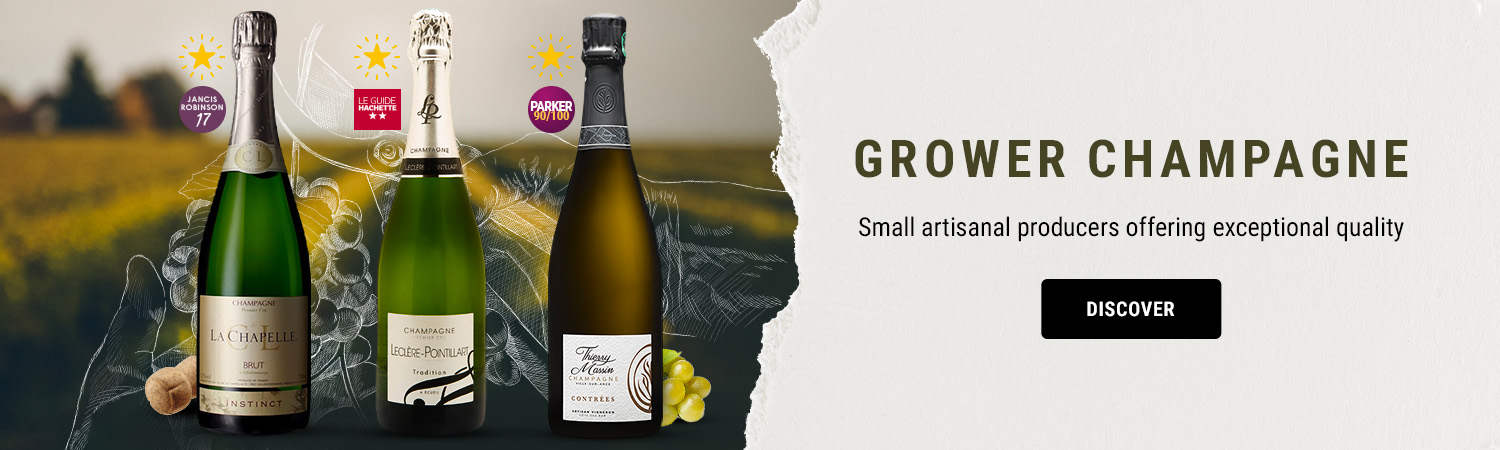
In addition to the quality of the products, many independent winemakers, offer excellent grower champagne vintages at more affordable prices than the major champagne houses. Among the producers grouped within the ‘vigneron’ champagne collective are, among others, Didier Doue, CL de la Chapelle, Thierry Massin, Haton & Filles, Edouard Brun and François-Brossolette.
Find the best champagne deals at Vinatis, your online wine shop. Vinatis offers great champagne offers all year round and the best champagne on sale.
Delicious food and champagne pairings
Although champagne is very often served as an aperitif or with dessert, it can also be enjoyed throughout a meal. The only thing to bear in mind is to pair it appropriately with the various dishes, depending on its sugar content. For an aperitif, a Non Dosé or Extra Brut champagne, which offers freshness and fine bubbles, is ideal. Tarama, thin slices of cured ham, shavings of Comté, aged cheddar or Parmesan cheese, or large prawns are perfect accompaniments. Dishes heavily seasoned with salt or spices, however, are not recommended, so as not to overpower the champagne’s texture. To accompany starters with a maritime flavour, such as seafood, fish ceviche or sushi, this same type of champagne is perfectly suited. The wine’s acidity pairs perfectly with the iodine-rich minerality of these dishes. The combination creates a pleasant freshness on the palate. Delicate and elegant, a Blanc de Blancs champagne is also generally enjoyed as an aperitif. However, it also pairs well with fish and seafood dishes served with a creamy sauce. Much more powerful, fruity and opulent, a Blanc de Noirs champagne enhances dishes with a little more character, such as roasted white meat, served in a sauce or stuffed. For semi-cured foie gras, a Blanc de Noirs is ideal, but a Blanc de Blancs from a more mature and powerful vintage is also appropriate. Powerful and fruity, a Rosé Champagne is a perfect match for dishes with a strong flavour, such as duck or lamb. This sparkling wine also pairs well with game dishes served with a red fruit sauce. For dessert, a Rosé Champagne pairs well with a chocolate cake or a red fruit dessert. With their high sugar content, Demi-sec and Sec Champagnes are often served with dessert.
After this brief overview of the Champagne phenomenon, both in our collective imagination and in the glass, it is easier to understand why this now legendary French wine has gained such popularity across the globe. Distinguished, it lends itself to all life’s great occasions, from simple pleasures to moments of celebration and festivities. The most astonishing thing is that its greatness and reputation are far from waning and are even extending beyond the globe’s circumference, if the latest winemaking experiments currently underway are anything to go by: thanks to a bottle specially designed by Octave de Gaulle, this prestigious, celebratory wine will be able to adapt to weightlessness. A testament to several centuries of history and looking to the future, this sparkling wine is also setting out to conquer space! While you wait to experience a fun and festive moment in space, add a touch of elegance to your celebrations or a simple aperitif with the wide selection of champagnes available on Vinatis. Whether from the great houses or small producers, Brut Non-Vintage, vintage cuvées, Blanc de Blancs, Blanc de Noirs, Rosé, non-dosé, Brut or even Dry, there’s something for everyone!

Assistance
Follow us
Location
You are on the shop Great Britain


Alcohol abuse is bad for your health, please consume in moderation.
© 2002-2026 VINATIS
