

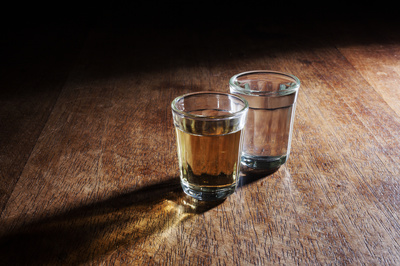
CACHAçA, A SPIRIT SIMILAR TO RUM
Cachaça is often confused with its cousin rum, so much so that when it comes from Brazil, rum is wrongly called "cachaça".
First preconceived idea: Cachaça is made from sugar cane, so it's rum!
Second preconceived idea: One of these drinks is better than the other.
No, cachaça is not rum! One cannot compare what is incomparable because indeed, cachaça and rum are of a different nature.
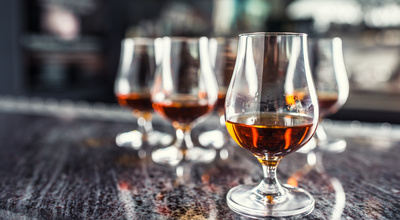
WHAT THESE TWO ALCOHOLS HAVE IN COMMON
The raw material
Rum and cachaça have sugar cane processing in common. They are both made from sugar cane juice obtained by crushing.
Conservation
Both rum and cachaça can be consumed in their « white » version, i.e. without ageing in contact with wood. However, rum and cachaça can also be found in an aged version, aged in barrels.
Indeed, cachaça can be aged in casks for a minimum of one year. The particularity of cachaça is that it can be aged in barrels other than oak, unlike most spirits: umburana, jequitibá, ipê, tapinhoã, balsam and other woods from Brazil. Woods that give cachaça its characteristic colours and aromas.
There is the cachaça gold which is aged in casks, and the white cachaça which is bottled immediately after distillation. For connoisseurs, cachaça gold is the best. But it remains a question of taste.

WHAT MAKES THEM DIFFERENT?
Their origin
You need to know that cachaça is THE typical and exclusive drink from Brazil. It is the result of the cultivation of sugar cane imported by the Portuguese colonists in the 16th century. The word "cachaça" is even protected by Brazilian legislation and its production is strictly limited to Brazil. Beyond Brazil, cachaça is also very popular in Mexico and other Latin American countries.
Rum, on the other hand, emerged in the early 17th century in the British Caribbean colonies.
The production process
Rum is a refined product that undergoes more transformations than cachaça.
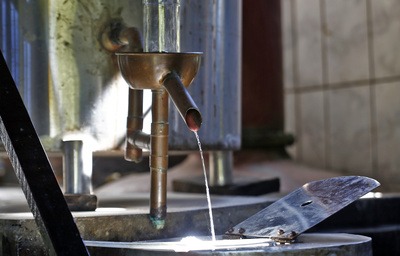
The cachaça, being more rustic, is the result of a more prototypical distillation. It is also produced in a traditional way by many local houses, where it is also known as "aguardente" (brandy), "pinga" (hooch)... The names of these alcohols also vary according to the region (branquinha, birita, caninha, gas, óleo etc).
Sugar cane processing
Rum is made with a cooking stock from sugar cane, while cachaça is made from fresh cane juice.
Taste
The cooking or not of the sugar cane results in two distillates with different chemical compositions and therefore, sensory properties without any analogy between rum and cachaça. In fact, in the case of rum, the substances present in the sugar cane must, such as esters and aldehydes, are altered during cooking. Effects on the final taste of the drink.
Distillation
Unlike agricultural rum, which is distilled at 65-75° and aged in oak barrels and then brought back to the desired degrees by adding spring water, cachaça is distilled at 40° and immediately bottled, which gives it aromas that are sometimes very powerful, as if to relive the most intense hours of the country's history over the course of a glass …
The volume of alcohol
A rum can therefore contain between 40% and 60% alcohol by volume, while cachaça is limited to 40%.
CACHAÇA DO BRASIL
Cachaça is one of the most consumed alcohols in the world and has become a true cultural product.
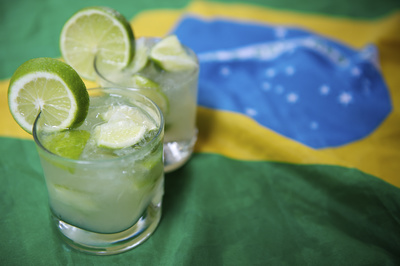
It's simple, it is known to be THE Brazilian drink par excellence and is the basic ingredient of the 3rd most consumed cocktail in the world today, the Caipirinha. Amazingly popular for an alcohol produced mainly by hand!
The Brazilian Institute of Cachaça (IBRAC) even celebrated a significant growth in exports in 2016.
The history of cachaça is linked to the history of Brazil:
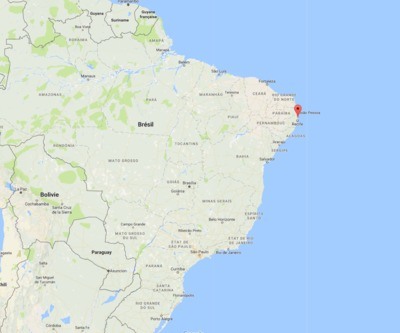
The first sugar cane plantation in Brazil was begun in 1504 by the explorer Fernão de Noronha, who settled on an archipelago that today bears his name.
It is possible to date the construction of the first sugar cane mill. It dates back to 1516, on the colonial administrative territory of the island of Itamaracá created by King Manuel I, on the coast of the current state of Pernambuco. A territory initially conquered for the exploitation of brazil-wood. A wood with dyeing properties that gave its name to the country later on.
The documentary evidence for this supposition was discovered in Lisbon in the customs payment records of a sugar shipment from Pernambuco. A document dating from 1526. Parallel archaeological research carried out by the Federal University of Bahia has uncovered the ruins of a sugar cane mill dating back to 1520 in the vicinity of Porto Seguro.
Martim Afonso de Souza, who led Brazil's first colonising expedition, and founded the first real settlement in the country by building the fort of São Vicente in 1532, played a decisive role: He developed the construction of mills and cultivation of sugar cane.
Although there is no precise record of the location of the first cachaça distillation, it can be located on the easternmost Brazilian coastline between 1516 and 1532. As a result, it was the first alcohol in Latin America, even before the appearance of the famous Peruvian pisco, Mexican tequila and rum of the Caribbean.
In the 19th century in Brazil, slaves had very little freedom (not surprising, since they were slaves…) except the freedom to drink to forget their condition. Then they drank « garapa »: sugar cane juice boiled without fermentation. The indigestible beverage is obtained by pressing sugar cane using rotary presses. Boiling allows sterilization, thus avoiding the development of bacteria…
In the 1910s, Brazil sought economic independence. This is how a Brazilian modernist current developed in literature, art and… cachaça, which participates in this development as a product of cultural identity, locally produced, and above all not to be exported, in order to make it something of powerful national value.
Did you know?
The synonyms and creative nicknames invented by the Brazilian people have accumulated over more than four centuries of cachaça history. Some of these words were created in order to deceive metropolitan surveillance at a time when cachaça was banned in Brazil; the drink was in competition with European grappa.
There are more than two thousand words for cachaça. Some of these nicknames are: abre-coração (open heart), água-benta (holy water), bafo-de-tigre (tiger's breath) and limpa-olho (eye wash).
Today there are more than 4,000 types of cachaça. A few large companies export their products but the vast majority are produced by a large number of local houses, selling their stock on the market, sometimes very locally.
Related searches: cachaca, cachace, cachassa, catchassa, catchaça, katchassa...

Assistance
Follow us
Location
You are on the shop Great Britain


Alcohol abuse is bad for your health, please consume in moderation.
© 2002-2026 VINATIS
