


Château Cos d'Estournel



17.5/20
Rated by 2 customers
The Cos d'Estournel vineyard currently extends over 91 hectares. The Cabernet Sauvignon grapes - 60% of the vineyard - find their preferred growing soil on the thin gravel of the summits and southern slopes. Merlot - 40% of the vineyard - thrives on the eastern slopes and the hillsides where the limestone bedrock of Saint-Estèphe is exposed. The percentage of Cabernet... Read more
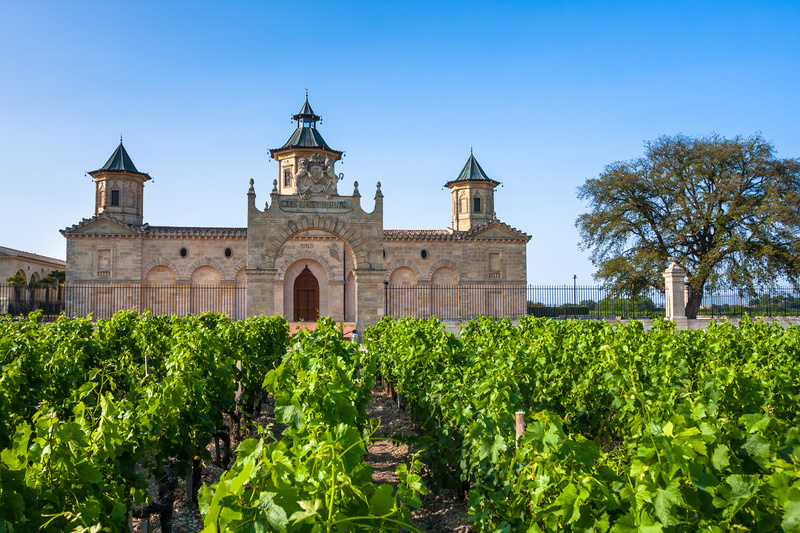
HISTORY OF A PALACE FOR WINE
The history of Château Cos d'Estournel began in 1791 when Louis Gaspard d'Estournel inherited the 14 hectares of vines of the Cos and Pomys estates. Convinced of the potential of this exceptional terroir, the Marquis d'Estournel did not hesitate to take the risk of developing his property. Expanding his vineyard year after year, he also acquired numerous plots of land, among the finest in the Saint-Estèphe appellation, with the ambition of achieving excellence. Open to the world around him, Louis Gaspard d'Estournel travelled to the four corners of the Earth to find new commercial outlets, particularly in the Far East.
Recognised for their quality, the wines of Château Cos d'Estournel were exported across the seas, including to India from 1838. Louis Gaspard's adventurous spirit and love for these lands even earned him the nickname of "Maharajah of Saint-Estèphe". Moreover, he was inspired to imagine the architecture of his property dedicated to wine, thus creating a majestic cellar; a real marvel to discover! To pay off his debts, Louis Gaspard was forced to sell his estate in 1952 to the London banker Martyn. During his lifetime, he was able to see his work recognised by the wine trade, which made it a Second Grand Cru of the Médoc.
Unfortunately, the "Maharajah of Saint-Estèphe" died two years before the 1855 Classification, which placed the estate in the rank of Second Cru Classé. Château Cos d'Estournel then passed from hand to hand (Spanish aristocrats Errazu, Hostein brothers, Fernand Ginestet, Merlaut family) before becoming the property of Michel Reybier in 2000. This entrepreneur is committed to continuing the visionary philosophy of Louis Gaspard d'Estournel and taking a decisive technical lead in his quest for excellence.
A BORDEAUX CASTLE TINGED WITH AN EXOTIC TOUCH
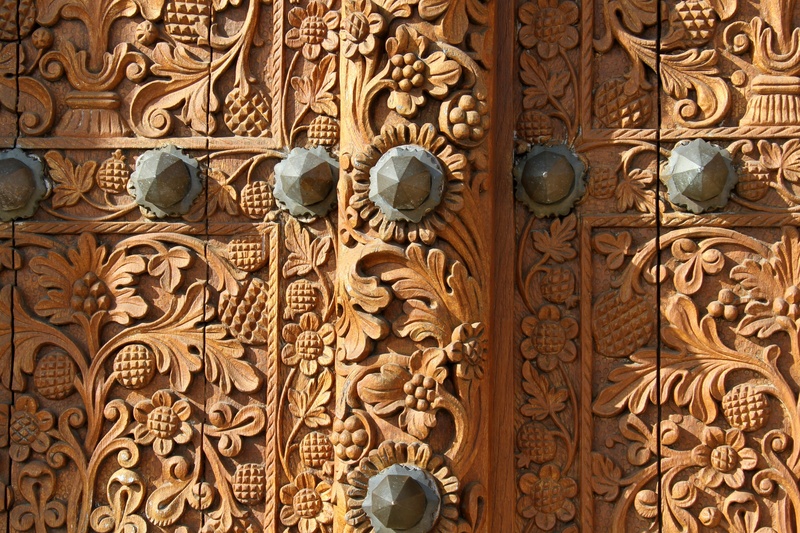
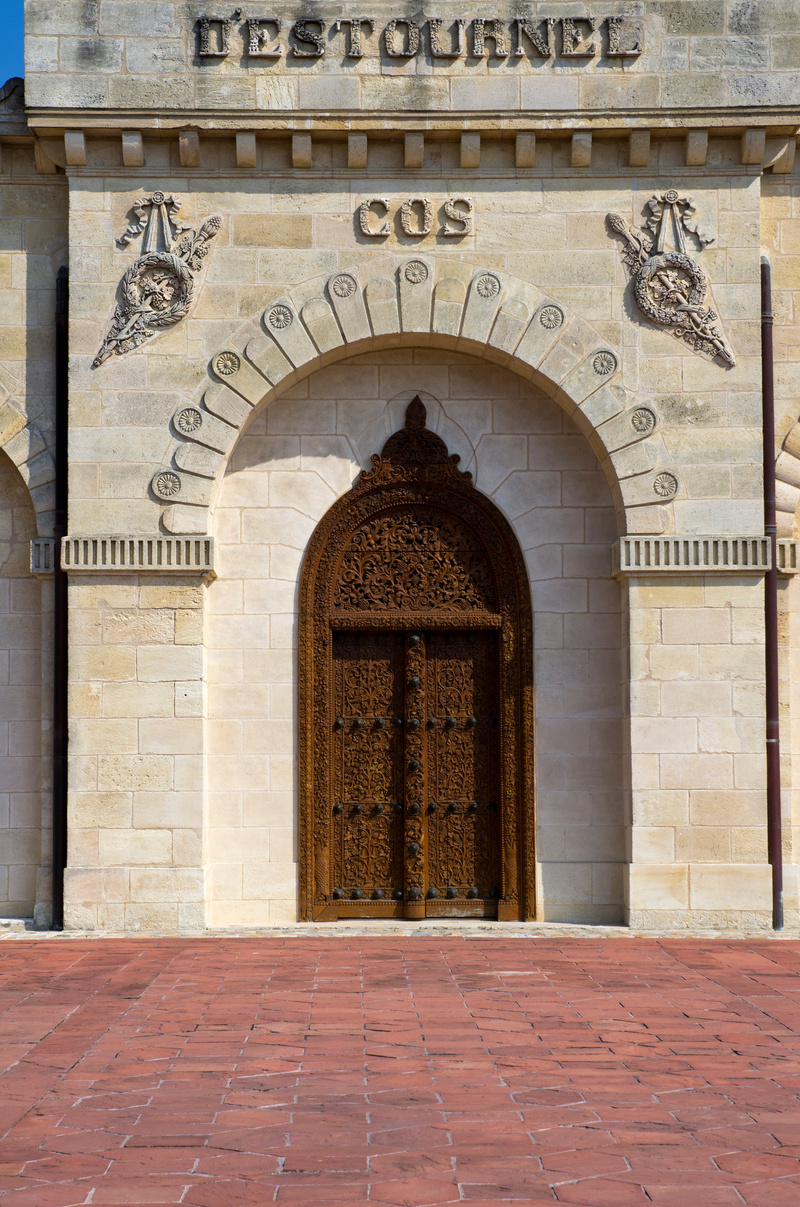
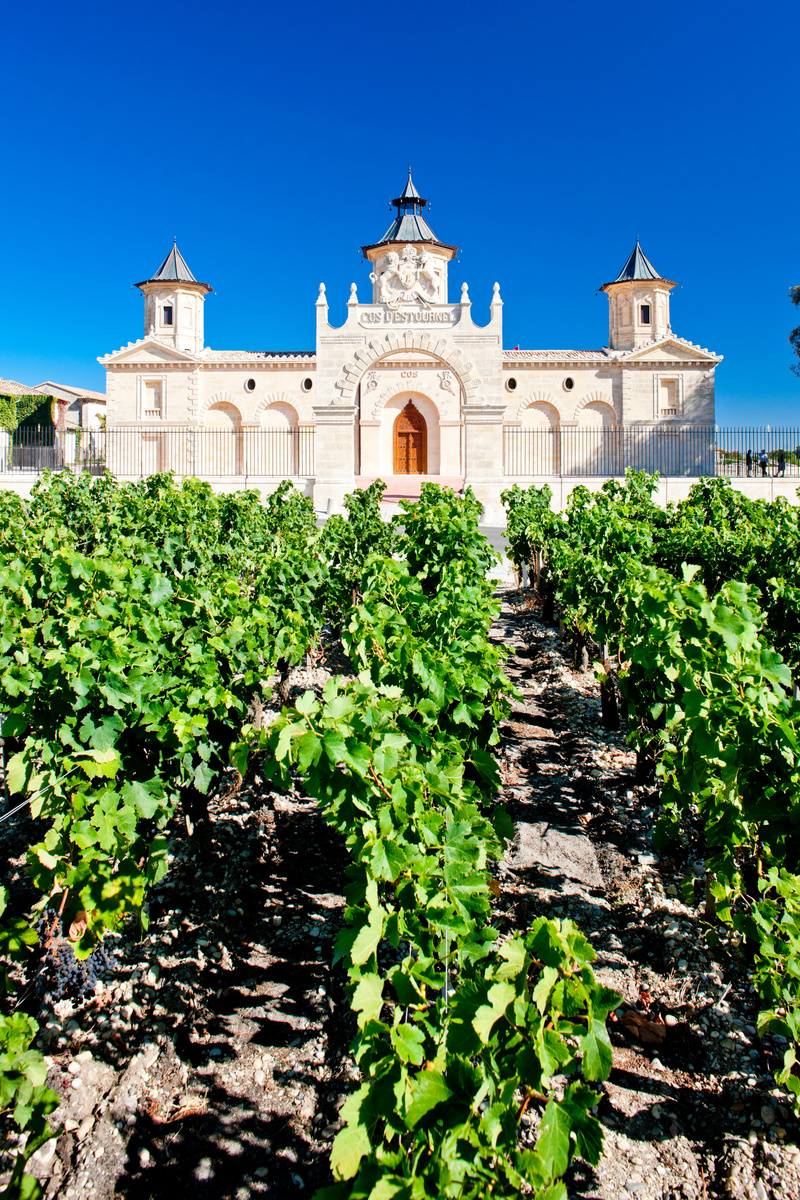
A true invitation to travel, Château Cos d'Estournel is renowned for its atypical architecture. Although built with the blonde stone typical of the region, the main building, housing the cellars, is notably topped by monumental pagodas. It is also adorned with a masterly carved wooden door from the palace of the Sultan of Zanzibar. The refinement and oriental touch of this property evoke a distant palace from Arabian Nights, making Cos d'Estournel an emblematic name of the Bordeaux vineyard. This exotic allure is definitely linked to the nickname given to Louis Gaspard d'Estournel at the time when he was exporting to distant destinations.
SAINT-ESTÈPHE SECOND CRU CLASSÉ
Located in the south of the Saint-Estèphe appellation, in the north of the Médoc and on the left bank of Bordeaux, Château Cos d'Estournel watches over a remarkable vineyard of incredible diversity. Separated from those of Château Lafite Rothschild by the Jalle du Breuil stream, the estate's vineyard covers approximately 100 hectares. The majority of the vines are Cabernet Sauvignon, supplemented by Merlot, Cabernet Franc and Petit Verdot varieties. The vines are on average 45 years old, with some very old vines being over 80 years old. Reflecting the complexity of the soil, these old vines bring depth and structure to the château's wines. To perpetuate the style of the estate's wines and ensure the heritage of future plantings, the team relies in particular on massal selection. The richness of the château's terroir also influences the unique style of this Second Cru Classé. The meaning of the name Cos in old Gascon, which translates as "pebble hill", perfectly reflects the location of the vineyard. The central part is anchored on a plateau of deep gravel. On the sides are two slopes, on deep gravel and clay soils. One faces east and the other south. In 2001, a study carried out in the vineyard mapped the soils, revealing nearly 20 different types. The vineyard of Château Cos d'Estournel benefits from its proximity to the Atlantic Ocean, which favours a maritime climate and limits excess weather. These conditions favour optimal ripening of the grapes, preserving a beautiful aromatic freshness and complexity. The wind sweeping across the terroir cleans the air and combats excess humidity, keeping the vines in good health.
FINE AND GENEROUS WINES
The perpetual quest for excellence guarantees that Château Cos d'Estournel produces exceptional wines that combine finesse and generosity. The estate offers a number of different wines, including the fine wine of Château Cos d'Estournel, made from vines of an average age of 55 years. Opulent and voluptuous, the red Cos d'Estournel fascinates with its spicy aromas balanced by the fruit, its silky tannins and its long finish. The estate also produces the white Cos d'Estournel, a blend of Sauvignon Blanc and Sémillon.
Seductive in its vivacity, this white Bordeaux wine reveals a complex aromatic bouquet of fruit (fig, mango, lemon zest and apple). Since 1994, Château Cos d'Estournel has also offered a Second Wine called Les Pagodes de Cos, produced from vines that are an average of 35 years old. Bright, silky and charming, this wine is both sweet and lively. The estate also produces a wine called Goulée by Cos d'Estournel, with intensely fruity flavours (red fruits) and supple tannins.
A UNIQUE STYLE FOR ONE OF THE BEST WINES IN THE WORLD
To preserve the unique style of Château Cos d'Estournel wines, whose motto is "Semper fidelis" meaning "always faithful", the estate's team relies on excellent techniques, both in the vineyard and in the cellar. In terms of viticulture, the winegrowers provide genuine support for the vines throughout the season. At Château Cos d'Estournel, the team practises parcel-by-parcel management of the vineyard. Thanks to the experience accumulated over the years and the perfect knowledge of the soils, the vineyard is managed in an extremely precise manner. The work is carried out foot by foot, according to the exposure of the row and the soil, allowing the identification of distinct batches. The separate vinification of the latter allows the richness of the vineyard and the great diversity of the terroir to be expressed to perfection. In the end, Château Cos d'Estournel produces wines of remarkable aromatic complexity and unique style. Château Cos d'Estournel also relies on its ultra-modern winery, where audacity and innovation are the watchwords. In 2003, the estate installed isothermal stainless steel truncated cone-shaped vats to ensure even extraction of the juice during fermentation. In addition, in 2008, the estate was equipped with the first fully gravity-fed winery in Bordeaux, where all stages of the winemaking process take place without the use of a pump. This gravity method allows the grapes and their juices to be treated very gently, allowing the tannins to gain in finesse and the wines to retain their subtlety.
CERTIFIED HIGH ENVIRONMENTAL VALUE
At Château Cos d'Estournel, one of the concerns of the team is to manage the vines and produce wine in the most natural and ecological way possible. The estate has been awarded High Environmental Value certification and is committed to preserving and respecting nature and the environment in all its actions.
This means, among other things, the planting of hedges, but also the use of know-how and the use of the most appropriate tools in the management of the vineyard.

Assistance
Follow us
Location
You are on the shop Great Britain


Alcohol abuse is bad for your health, please consume in moderation.
© 2002-2026 VINATIS
