


Bollinger Champagne
Discover our selection of wines from the iconic Champagne House
A historic, independent, family-owned Champagne house, Bollinger produces great champagnes with a powerful and refined style. A unique style born of a culture of excellence and respect for tradition. Their production is based on five immutable elements: an exceptional estate vineyard, Pinot Noir, reserve wines in magnums, barrels and time.
The history of Bollinger Champagne began in 1829 with Athanase de Villermont, who inherited a vast family estate near Aÿ. His family had been established in the Champagne vineyards since 1650. Unable to engage in trade due to his aristocratic status, he joined forces with Joseph Bollinger and Paul Renaudin. At the time, none of them could have imagined that their company would become one of the greatest Champagne Houses.
Under the leadership of Joseph Bollinger and Georges Bollinger, son of Joseph Bollinger, and Louise-Charlotte Hennequin de Villermont, daughter of Admiral Athanase, the House gained notoriety and expanded its vineyards. The company managed to stay on course despite major historical challenges, such as the phylloxera crisis and the Great War. In 1920, Jacques Bollinger, Joseph's son, took over the reins of the establishment. At only 24 years of age, he faced economic difficulties and those of the Second World War with aplomb and the help of his family.
The arrival of Elizabeth Bollinger, a Scottish woman born Law de Lauriston-Boubers and Jacques's wife, marked a turning point for the Bollinger Champagne House. Upon her husband's death, she took up the torch with enthusiasm and passion, even as the war raged on. With her visionary and entrepreneurial spirit, ‘Madame Jacques,’ as she was known in the House, managed the company with a masterful hand thanks to her innate business sense. Passionate and dedicated, Lily was also a perfectionist who tolerated nothing less than excellence. She also demonstrated a spirit of innovation, notably creating the original Bollinger R.D. cuvée.
Since then, the teams at Bollinger have continued the family legacy, respecting the spirit, principles and values that have made it famous. Furthermore, despite the many challenges it has faced, the House is one of the few that remains independent and still belongs to its founding family. It owes its success to the quality of its cuvées, achieved through a constant pursuit of excellence, but also to the strength of its family ties, which are the driving force behind Bollinger.
Discover our selection of wines from the iconic Champagne House
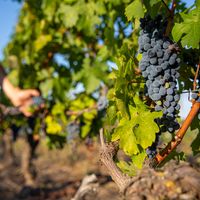
Since 1829, Bollinger has built its vineyard in the heart of the best terroirs in Champagne. The House cultivates more than 170 hectares of vines on its own property, which is extremely rare in Champagne. The vineyard is divided into seven distinct vineyards: Aÿ, Avenay, Louvois, Tauxières, Verzenay, cultivated with Pinot Noir and surrounding the Montagne de Reims, Cuis, dedicated to Chardonnay in the Côte des Blancs, and Champvoisy, planted with Pinot Meunier in the Vallée de la Marne. A majority of 85% is located in the terroir of Grands Crus of Champagne and Premiers Crus of Champagne, contributing to the richness of the vineyard and enabling the House to be one of the few to produce its own grapes for its blends.
Vine cultivation requires physical labour and expertise, which Bollinger practises with masterful skill thanks to ancient cultivation methods on two of its plots that have miraculously escaped phylloxera: Clos Saint-Jacques and Chaudes Terres in Aÿ. These ungrafted vines are cultivated using the ancient technique of provinage, a rare and ancient method that excludes grafting and consists of manually replanting new shoots by laying a stump so that it takes root, reproducing the original characteristics of the pre-phylloxera vine [which was spared by phylloxera]. This practice pays tribute to the heritage of Champagne. A real treasure!
The Bollinger House is uncompromising in its pursuit of excellence. In this spirit of perfectionism, it is committed to the Earth, its people and its local roots, with a strong desire to protect its heritage and family vineyard, its expertise and winemaking tradition, in a spirit of developing local life.
Bollinger is committed to sustainable viticulture practices with the aim of preserving Champagne's wine-growing heritage, from beautifying the vineyards to preserving ungrafted vine plots. Numerous measures have been taken to protect the soil, air, water and biodiversity while reducing energy consumption: soil maintenance through plant cover in the vine rows and the complete replacement of herbicides with mechanical weeding. The House has established itself as the first Champagne trading house in the region to receive the High Environmental Value state certification in 2012, coupled with the sustainable viticulture certification. This achievement has contributed greatly to the inclusion of all the hillsides, Houses and cellars of Champagne in the UNESCO World Heritage List.
Ensuring that traditions are preserved, Bollinger has seen generations of coopers, riddlers and disgorgers grow up. The champagnes are therefore produced in small oak barrels before being blended, drawn and stored in the cellar under cork for a minimum of five years. The cooper ensures that the vinification process in barrels runs smoothly, a rare procedure for champagnes. The Bollinger riddler manually riddles up to 50,000 bottles per day. The disgorging specialist opens all the corked bottles by hand, using a method known as ‘à la volée’, which is crucial for the wine. These precious skills guarantee Bollinger's unique taste.
Another distinctive feature is that Bollinger is one of the few diehard Champagne producers to continue the noble tradition of wooden barrel ageing. Historically, wine was always aged in barrels, but in the 20th century stainless steel came along, threatening to erode this precious expertise. For nearly two centuries, Champagne Bollinger has chosen to vinify its champagnes in oak barrels, maintaining the tradition and nobility that wood brings to wine. Thanks to its porosity, which promotes slight oxygenation, it is the oak that gives Bollinger champagnes their beautiful creaminess. The House uses only old barrels from Burgundy that have already been used to vinify Chardonnay, thus limiting the pronounced woody taste of new barrels.
The House therefore has the largest collection of barrels in Champagne, with 4,000 barrels for a single man. Each barrel, some of which are over 100 years old, requires the utmost attention from the cooper during all stages of winemaking. The cooper works on site to manufacture and repair the barrels, closely monitoring the stock and ensuring that they are meticulously maintained at all times. This involves cleaning, drying and bunging the barrels to guarantee optimal fermentation and wine preservation. The oak barrels must be perfectly watertight and clean to receive the must at harvest time. Crucial to the quality of the wines, this craft requires rigorous training and is a profession that is passed down from generation to generation. It is a true living heritage that Bollinger is committed to preserving.
Immediately after bottling the year's blends, the cellar master is responsible for storing all these bottles in the cellar so that they can undergo secondary fermentation and ageing. The wine then undergoes a transformation over time, orchestrated by strict specifications. This maturation period is much longer than the AOC rules require. The House takes the art of reserve even further, practising a method that is unique to it and unique in Champagne: that of reserve wines in magnums. Each year, a portion of the best wines from the recent harvest is set aside to be bottled and stored. More than 800,000 magnums of reserve wine are aged vintage by vintage, year by year, and represent a fascinating choice for blending non-vintage champagnes.
Vinification in magnums consists of a small amount of sparkling wine aged on lees for 10 years, which undergoes autolysis (the self-destruction of the cells of certain micro-organisms, which then turn into sediment in the wine). This process, which adds complexity to the wine, begins after a few weeks of ageing on lees and involves the enzymatic self-degradation of yeasts, releasing a number of cellular components into the wine that play an important role in its sensory characteristics: they give the wine its mellow texture and impart a distinctive flavour, such as aromas of dried fruit, frangipane, nougat or mild roasting, which can also be associated with a delicate rancio. The luxury of this ageing process gives champagne subtle spicy aromas and a rare refinement.
Champagne is an art form for Bollinger, which strives to capture the essence of each terroir and each grape variety in order to express their unique characteristics in its cuvées. The House has a strong affinity with Pinot Noir, around which it has built its identity. Representing around 60% of the vineyard, this grape variety gives the wines their power.
It is also the predominant grape variety in each cuvée, when the cuvée is not dedicated to a single variety. Demanding and fragile, it requires constant attention and the wines it produces require a very long maturation period.
Only a virtuoso blender can master its character. Bollinger strives to enhance Pinot Noir because it produces wines of incomparable finesse. It gives champagne vinousness, structure and beautiful complexity. As the House's signature grape variety, it is the hallmark of Bollinger's distinctive vinous style of champagne.
Launched in 2014, the PN concept aims to innovate while remaining faithful to the authenticity of the House. The PN collection (the same initials as the name of the grape variety) best reflects this love of Pinot Noir. Two letters on the label designate the House's signature grape variety.
These initials are accompanied by those of the terroir: TX for the ‘Tauxières’ vineyard, VZ for ‘Verzenay’, the House's historic Grand Cru, and AYC for the terroir of Aÿ, followed by the base year that dominates the blend.
Each edition showcases a terroir according to the crus and a specific year, blending reserve wines with those from the base year for a unique harmony. The cuvées in the collection are wines to be shared among enthusiasts seeking the different expressions of Pinot Noir in Champagne. These bespoke creations help to prolong Bollinger's heritage and affirm its legendary style, while reinventing themselves each year.
By type of champagne




Our Selection of Bollinger Champagnes

By subscribing I agree to receive the Vinatis newsletter.
I am aware that Vinatis has implemented a personal data protection policy, which can be accessed here, and that I may unsubscribe at any time via the unsubscribe link included in every newsletter.
This site is protected by reCAPTCHA and the Google Privacy Policy and Terms of Service apply.
Assistance
Follow us
Location
You are on the shop Great Britain


Alcohol abuse is bad for your health, please consume in moderation.
© 2002-2026 VINATIS


